

Starting February 1, 2025, U.S. carriers will block all unregistered 10DLC text messages. This means every franchise must comply with strict SMS marketing rules to avoid penalties, message blocking, or fines of up to $10 million. Here’s what you need to know:
- 10DLC (10-Digit Long Code): A regulated system for business texting using local phone numbers.
- Mandatory Registration: Franchises must register their brand and campaigns with The Campaign Registry (TCR).
- Express Consent: Every customer must explicitly opt in to receive SMS messages.
- Opt-Out Compliance: Provide clear opt-out instructions (e.g., “Reply STOP”) and process requests immediately.
- Message Standards: Messages must match registered campaign purposes and avoid prohibited content (e.g., SHAFT categories).
- Penalties: Non-compliance can result in severe fines, carrier blocks, or legal action.
For franchises, compliance is especially critical since issues at one location can disrupt messaging across the entire network. Centralized policies, standardized opt-in processes, and automated tools like RevText can simplify compliance and protect your brand.
Key Takeaway: Register your 10DLC campaigns, secure clear opt-ins, and follow strict messaging rules to maintain SMS marketing success without interruptions.
What is 10DLC and Why It Matters for Franchise SMS Marketing
10DLC Overview and Key Features
10DLC, or "10-Digit Long Code," refers to standard local 10-digit phone numbers (e.g., 555-123-4567) that are specifically registered and approved for business SMS messaging. Essentially, it serves as a verified line for businesses to communicate with customers via text.
Launched in 2021 to combat SMS spam, phishing, and other misuse, 10DLC ensures that only verified businesses can send messages. Starting February 1, 2025, all SMS and MMS traffic must be registered under 10DLC – unregistered messages will face blocking, spam filtering, or higher fees.
What makes 10DLC stand out is its balance between cost, compliance, and functionality. Unlike short codes (5-6 digit numbers used for high-volume campaigns), 10DLC is more affordable while still offering moderate throughput. It also has stricter regulations compared to toll-free numbers, which are generally used for customer service rather than marketing.
| Feature | 10DLC (Long Code) | Short Code | Toll-Free Number |
|---|---|---|---|
| Throughput | Moderate (1-75 messages/second) | High | Moderate |
| Cost | Lower | High | Moderate |
| Compliance | Strict (TCR required) | Strict (CTIA required) | Less regulated |
| Primary Use | Marketing, alerts | Mass campaigns | Customer service |
| Registration | Mandatory (2025) | Mandatory | Optional |
Carriers enforce these rules rigorously and automatically. Messages sent without proper registration are blocked immediately.
How 10DLC Affects Franchise Marketing
For franchises, 10DLC has a direct impact on how effectively they can communicate with customers. Registering for 10DLC not only avoids penalties but also ensures messages are reliably delivered across networks.
This reliability is critical for time-sensitive campaigns, such as flash sales, appointment reminders, or promotional alerts. Plus, the standardized compliance framework helps franchises maintain a strong and consistent brand image across all locations. A compliance issue at one franchise location could jeopardize messaging for the entire network, making uniform standards a must-have.
Data shows that A2P (Application-to-Person) SMS traffic grew by nearly 20% between 2017 and 2019, highlighting the growing importance of compliance systems like 10DLC to ensure continued growth. Experts emphasize that proper registration not only improves message delivery rates but also builds trust with customers, making SMS a highly effective marketing tool.
For franchises operating in multiple states or regions, 10DLC offers a scalable solution. Once a brand and its campaigns are registered, businesses can run consistent messaging strategies without worrying about varying regulations or carrier-specific rules.
Centralized tools further simplify compliance management across all locations. Platforms like RevText make this process easier by offering services such as automated 10DLC registration, opt-in management, and real-time monitoring of campaigns, ensuring franchises stay compliant and efficient.
🔔10DLC Opt-In and Opt-Out Flows for SMS Texting (Outbound)🔔
The Campaign Registry (TCR): Registration Requirements for Franchises
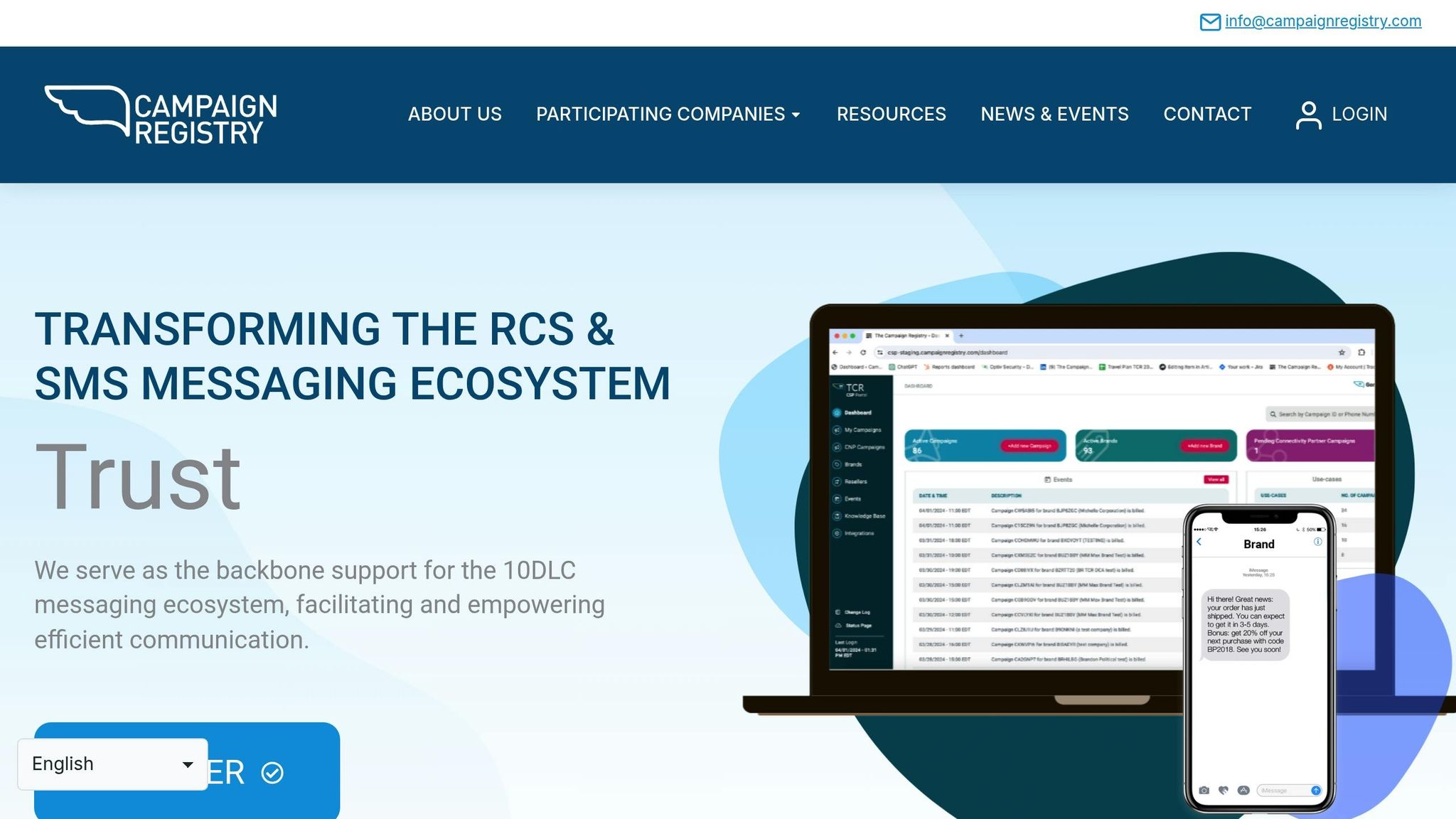
The Campaign Registry (TCR) acts as the central authority for managing 10DLC (10-digit long code) SMS registrations in the United States. Its role is to verify every business that sends SMS messages using these numbers. For franchises, meeting TCR requirements isn’t just a box to check – it’s essential for ensuring your messages reach your audience. Without proper registration, your communication efforts could be completely blocked. Here’s a closer look at what franchises need to know.
Brand and Campaign Registration
TCR registration for franchises involves two main steps: brand registration and campaign registration. First, you’ll need to register your franchise’s brand, which establishes your corporate identity in the system. After that, each campaign – whether it’s for a specific location or a particular messaging initiative – must be registered individually.
For example, imagine a national gym franchise. The corporate brand would only need to register once. However, each local studio running its own campaigns – like membership promotions, class reminders, or special event notifications – would require separate campaign registrations. It’s not just about organization; carriers assign trust scores to these campaigns. These scores determine how quickly you can send messages and whether they’ll make it to customers’ phones or get flagged as spam. A properly registered campaign, like a fitness studio in Austin promoting local boot camp classes, will have optimal delivery speeds. Unregistered campaigns, on the other hand, face severe restrictions.
Required Documents for TCR Registration
To register with TCR, you’ll need to provide documents that verify your franchise’s legitimacy and compliance. These include:
- Business Tax ID (EIN)
- Legal Business Name
- Physical Address (P.O. Boxes are not accepted)
Additionally, TCR requires proof of how customers opt in to receive your messages. You’ll need to submit sample opt-in forms that clearly show the language and process used to obtain consent. Whether it’s through website forms, in-person sign-ups, or mobile keyword subscriptions, these samples must meet federal consent standards. TCR reviewers carefully examine them to ensure compliance.
For franchises with multiple locations, the process can get more complicated. Each location often needs its own set of documents if registered as a separate campaign. For example, if local campaigns target specific audiences with location-based content, each franchise location may need to submit its own paperwork. In cases where corporate headquarters handle registrations for franchisees, additional documents – like franchise agreements or authorization letters – may also be required.
Don’t forget to include links to your privacy policy and terms of service. These must be publicly accessible and explain your SMS practices, such as how customers can opt out and the types of messages they’ll receive. TCR reviewers will check that these links are functional and meet compliance standards before approving your registration.
New Reseller ID Requirements for 2025
Starting in 2025, TCR is introducing a new rule: Reseller IDs will be required for any entity registering 10DLC campaigns on behalf of another business. This change directly impacts franchise headquarters that manage SMS campaigns for their franchisees.
If a corporate office registers campaigns for individual franchise locations, it is considered a reseller under TCR guidelines. In this case, the corporate office must include a valid Reseller ID in every campaign registration. It’s important to get this right the first time because the Reseller ID cannot be changed after registration. If there’s an error, you’ll need to start the process from scratch.
This new requirement is strictly enforced. Carriers cross-check Reseller IDs against their databases, and any mismatches result in automatic campaign rejection. For franchises managing dozens – or even hundreds – of locations, this rule adds complexity. Coordination between corporate compliance teams and local operators becomes critical to avoid delays or errors.
To simplify the process, franchises can use automated tools like RevText. These tools streamline Reseller ID management and handle bulk registrations, reducing the administrative workload. By automating these steps, corporate offices can ensure compliance across all locations while minimizing the risk of costly mistakes.
Registration Timeline
TCR registration typically takes 3 to 7 business days, depending on how complete and accurate your documents are. While there aren’t official expedited options, using automated tools can significantly speed things up. These tools help eliminate common errors and ensure all required fields are correctly filled out before submission, reducing delays and keeping your campaigns on track.
Opt-In Compliance: Building Consent-Based SMS Lists
Following TCR registration requirements is just the first step. Building a compliant opt-in list is crucial to ensure your SMS messages are delivered effectively across your franchise network.
Getting customer consent isn’t just about meeting legal requirements – it’s the backbone of successful SMS marketing under 10DLC rules. Every subscriber must explicitly agree to receive your texts, and you need to keep a record of that consent.
Express vs. Implied Consent
When it comes to SMS marketing, express consent is a must. This means customers actively agree to receive your messages – whether by checking a box, texting a keyword, or signing a form – after being clearly informed about the type of messages they’ll get. Simply relying on implied consent from a prior relationship doesn’t cut it under TCPA rules.
This distinction is especially important for franchises. You can’t just add existing customers to your SMS list because they’ve interacted with your business before. Each individual must actively opt in, fully understanding what they’re signing up for – whether you’re running a single gym or managing a nationwide franchise network.
How to Collect Opt-Ins Properly
To collect opt-ins the right way, use clear language and document everything. Every method – whether it’s a web form, an SMS keyword campaign, an in-person signup, or a landing page – needs to clearly state that customers are agreeing to receive text messages from your business.
Be specific in your opt-in messaging. For example, instead of saying “stay connected,” use something like: “By texting JOIN, you agree to receive marketing messages from [Your Franchise Name].” This eliminates any confusion about what customers are signing up for.
Make sure to record each opt-in by capturing details like the date, time, and method (e.g., a screenshot, SMS log, or signed form). A double opt-in process adds an extra layer of confirmation. Send a follow-up text verifying the subscription, including your business name, how often messages will be sent, opt-out instructions (e.g., reply STOP), and links to your privacy policy and terms of service.
For franchises, including the specific location in your opt-in messaging can help build trust with customers. This thorough opt-in process ensures you’re meeting compliance standards while setting the stage for effective communication.
Managing Opt-Ins Across Multiple Franchise Locations
For franchises, consistency is key. Standardizing opt-in procedures across all locations ensures compliance and simplifies management. Use a single system to collect and store consents, ensuring every location follows the same documented process. Train staff with standardized forms, privacy policies, and conduct regular audits to maintain consistency.
A centralized SMS platform can make this much easier. Instead of managing separate systems for each location, a unified platform allows you to track opt-ins by location while keeping a master compliance record. This also simplifies campaign registration with The Campaign Registry, letting you document all opt-ins under one brand while including location-specific details.
Platforms like RevText are designed to tackle these challenges for franchises. They centralize compliance management, standardize opt-in collection, and maintain accurate records – whether you’re overseeing five locations or five hundred. This eliminates the risks of inconsistent practices across your network.
If you already have customer lists, you’ll need to send a one-time notification to collect explicit consent before including them in 10DLC campaigns.
Failing to follow proper opt-in procedures can lead to severe penalties. Businesses that send unsolicited messages can face fines of up to $10 million per violation under TCPA rules. For franchises, a single violation at one location can tarnish the SMS reputation of the entire network, potentially disrupting messaging capabilities across all locations. Establishing a centralized, compliant opt-in process is a critical step to avoid these risks and pave the way for effective SMS marketing.
sbb-itb-9f7e00b
Message Content Standards and Opt-Out Compliance
Once you’ve established a compliant opt-in list, the next step is ensuring every message you send meets strict content standards. These rules are non-negotiable – they protect your business, your customers, and ensure your messages are delivered smoothly through carrier networks.
Required Message Content for Compliance
Every SMS you send must clearly identify your business and provide standard opt-out instructions. For example: "ABC Fitness: Get 20% off today! Reply STOP to opt out."
Your message content also needs to align with the campaign description you submitted during TCR registration. Carriers actively check that your actual messages match the stated purpose of your campaign. Consistency is key here. Additionally, avoid prohibited content categories – commonly referred to as SHAFT (Sex, Hate, Alcohol, Firearms, and Tobacco) – to prevent your messages from being flagged or blocked by carriers. Standardizing message templates across all franchise locations can help reduce compliance risks and streamline messaging operations.
Next, let’s look at how to manage opt-out requests effectively across your network.
How to Handle Opt-Out Requests
When a customer replies "STOP" to any of your messages, their opt-out request must be processed immediately and applied across your entire franchise network. This means adding their number to a centralized suppression list to ensure they no longer receive messages from any location within your network.
The most efficient way to handle this is by using a unified SMS platform that automatically processes "STOP" replies and synchronizes updates in real time. Regularly testing your opt-out mechanisms ensures they’re working 24/7, and offering alternative opt-out methods – like a phone number or website link in your privacy policy – demonstrates your commitment to respecting customer preferences.
Platforms such as RevText can simplify this process by managing centralized opt-out lists and ensuring compliance across all franchise locations.
Ignoring opt-out requests or failing to comply with these standards can lead to severe penalties.
Penalties for Non-Compliance
Starting February 1, 2025, U.S. carriers will block all text message traffic from unregistered or non-compliant 10DLC numbers. This could result in a complete service shutdown. Beyond service disruptions, violations of the Telephone Consumer Protection Act (TCPA) can lead to fines of up to $1,500 per message. For franchises sending hundreds or thousands of messages each month, these fines can add up quickly. In extreme cases, such as ignoring opt-out requests or sending unsolicited messages, fines can reach as high as $10 million per violation.
Non-compliance at even one franchise location can jeopardize messaging capabilities across your entire network, potentially forcing you to restart the registration process from scratch.
| Compliance Violation | Consequence | Financial Penalty | Long-term Impact |
|---|---|---|---|
| Missing sender identification | Message blocking | Up to $1,500 per message | Damaged carrier reputation |
| No opt-out instructions | Message filtering | Fines up to $10 million | Registration revocation |
| Ignoring STOP requests | Network-wide blocking | Potential legal action | Brand-wide compliance issues |
With SMS open rates averaging 98%, maintaining compliance is essential to preserving this valuable marketing tool. By adhering to these content and opt-out standards, you protect your franchise’s reputation and ensure consistent customer engagement across all locations.
Carrier Enforcement and Monitoring
Carriers keep a close eye on every 10DLC message to ensure that it aligns with compliance standards. Knowing how this process works is essential for maintaining your franchise’s messaging capabilities, especially when building on the opt-in management and compliance practices discussed earlier.
Carrier Filtering and Message Throttling
Carriers evaluate SMS traffic in real time, analyzing each message against your campaign’s registered details, compliance history, and activity trends. If a message doesn’t align with its intended purpose, it might be delayed, rejected, or flagged for manual review. For instance, a sudden rise in opt-out requests or spam complaints can prompt additional scrutiny.
Throttling, on the other hand, controls how quickly messages are delivered. Registered 10DLC campaigns generally achieve throughput rates of 1–75 messages per second, depending on factors like your trust score and vetting level. However, if carriers detect unusual activity, they might slow down your sending speed or even pause deliveries temporarily. This can disrupt time-sensitive campaigns, as delayed messages may fail to drive immediate engagement. Repeated filtering issues can also damage your trust score, leading to stricter limitations on future messaging.
Your campaign’s trust score, compliance record, and messaging type all influence message throughput. High-trust campaigns with clean histories enjoy faster delivery rates, while those with past issues face tighter restrictions. This filtering process forms the foundation for the ongoing performance monitoring discussed below.
Compliance Monitoring for Franchises
Carriers don’t stop at filtering – they continuously monitor key metrics across your entire franchise network. Metrics like message volume, complaint rates, and content consistency are analyzed to ensure compliance across all locations.
Volume monitoring helps detect unusual spikes that could indicate spam-like behavior. For example, if one franchise location shows a sudden, unexplained increase in message volume, carriers will investigate to determine whether it’s due to legitimate business growth or aggressive messaging practices.
Complaint tracking measures how many recipients report your messages as spam. Even a slight uptick in complaints can draw carrier attention. Since issues at one location can affect the reputation of your entire network, maintaining consistent standards across all branches is critical.
Deviations from your registered campaign purpose can lead to immediate suspension. Given the speed of automated monitoring systems, franchises must regularly audit their campaigns. Keep an eye on opt-out rates, monitor complaint levels, and ensure that every location follows the same messaging guidelines. Addressing flagged issues quickly, with proper documentation and corrective actions, can minimize enforcement risks.
Using a centralized SMS platform can simplify compliance management across your network. Tools like RevText provide monitoring features that track compliance metrics and alert you to potential problems before carriers take action. This proactive approach helps your franchise maintain smooth operations and the high deliverability rates needed for effective SMS marketing.
Franchise-Specific Challenges and Solutions
Franchises face unique hurdles when managing SMS campaigns across multiple locations, especially when it comes to compliance with 10DLC regulations. Unlike single-location businesses, franchises must coordinate efforts between corporate headquarters and individual operators while ensuring consistent standards across the entire network. Carrier monitoring applies to all businesses, but the added complexity of managing multiple locations makes compliance even trickier for franchises.
Coordinating Between Corporate and Franchise Operators
One of the biggest challenges for franchises is maintaining compliance across all locations, particularly since expertise in SMS marketing often varies. Corporate teams usually have a solid understanding of 10DLC regulations, but franchisees may lack the resources or training to implement these rules effectively.
If a single franchise location mishandles opt-ins or fails to process opt-out requests correctly, it can damage the trust score for the entire brand. Carriers don’t distinguish between campaigns managed by corporate and those run by individual locations – they evaluate the brand as a whole.
To address this, centralized policies and resources are critical. Corporate teams should develop standardized templates for opt-in language, message content, and opt-out instructions. These templates should undergo legal review to ensure they comply with both 10DLC and TCPA requirements.
Training is another essential piece of the puzzle. Regular sessions can help franchisees understand key concepts like express versus implied consent, proper documentation of opt-ins, and how to handle opt-out requests correctly. Without this knowledge, franchisees could unknowingly violate regulations, putting the entire network at risk.
Clear communication channels between corporate and franchise operators are equally important. Establishing a system for escalating compliance questions ensures franchisees can get quick, accurate answers when needed. This kind of support helps prevent small mistakes from escalating into larger issues.
Standardizing Opt-In and Opt-Out Processes
Inconsistencies in how franchises handle opt-ins and opt-outs can attract carrier scrutiny. To avoid this, every franchise location should use the same opt-in forms and consent language, whether customers are signing up online, in person, or via SMS keywords. Standardization ensures that all locations meet the same legal requirements for consent collection.
Uniform opt-out instructions, such as "Reply STOP to opt out", are equally important. Automated workflows should be in place to process opt-out requests immediately and update records across the entire franchise network in real time. Manual handling of opt-outs is risky – it can lead to delays or errors, such as messaging someone who has already opted out.
Centralized record-keeping is another must. Franchises need accessible, detailed records of when and how consent was collected, along with timestamps for opt-out requests. These records are crucial during compliance audits and help protect the business from penalties.
For example, a national fitness franchise successfully implemented standardized opt-in forms and automated opt-out processes across all locations. Corporate provided training and compliance checklists, which led to a 30% boost in opt-in rates and zero carrier blocks or legal complaints over a year. Regular audits and analytics further ensured compliance and addressed any issues quickly.
Using RevText for Compliance Support

Technology can play a major role in simplifying compliance for franchises. Platforms like RevText centralize and automate key processes, making it easier to manage SMS campaigns across multiple locations.
RevText’s keyword replies feature standardizes how customers interact with campaigns. Whether someone texts "JOIN" to opt in or "STOP" to opt out, the platform processes these requests automatically and updates records across the franchise network in real time. This eliminates delays and errors that can occur when individual locations handle requests manually.
The platform also includes compliance tools that track consent collection and store detailed records for audits. It automatically logs when and how opt-ins were obtained, stores proof of consent, and generates reports corporate teams can use to monitor compliance across locations.
RevText offers additional oversight by providing visibility into compliance metrics for each franchise location. Corporate teams can monitor opt-in rates, analyze opt-out patterns, and identify locations that may need extra training or support. This proactive approach helps prevent compliance issues from spreading across the network.
For busy franchise operators, RevText’s mobile app makes it easy to manage campaigns and monitor compliance from anywhere. Features like MMS support and link tracking allow franchises to run sophisticated campaigns while meeting strict 10DLC standards.
Perhaps most importantly, RevText’s end-to-end service model takes the burden of technical compliance off individual franchisees. Instead of expecting every operator to become a compliance expert, the platform handles the heavy lifting and provides tools to maintain consistent standards across all locations. This ensures that franchises can focus on running effective campaigns without compromising on compliance.
Conclusion: Staying Compliant and Maximizing SMS Marketing Success
Navigating 10DLC regulations may feel daunting, but it’s absolutely necessary for franchises aiming to thrive in SMS marketing. Starting February 1, 2025, US carriers will block all unregistered 10DLC traffic, making compliance a non-negotiable part of reaching your audience effectively.
The stakes for non-compliance are high – message blocking, hefty carrier penalties, and fines that can soar up to $10 million per violation. On the flip side, registered campaigns not only avoid these headaches but also benefit from higher deliverability, stronger customer trust, and the ability to send up to 75 messages per second.
For franchises, the challenge goes beyond individual compliance. With multiple locations under one brand, a single misstep by any operator can damage the trust score for the entire network. That’s why having centralized policies, standardized procedures, and proper training is critical to protecting the brand’s reputation and maintaining compliance across the board.
Key steps to staying compliant include:
- Registering your brand and campaigns with The Campaign Registry.
- Securing and documenting express opt-in consent.
- Providing clear opt-out instructions in every message.
- Keeping thorough records to prepare for potential audits.
With SMS marketing boasting a 98% open rate, it’s a channel too valuable to jeopardize through oversight or non-compliance. Technology platforms like RevText can make this process easier by automating compliance workflows, standardizing opt-in and opt-out procedures, and offering the oversight needed to manage campaigns across multiple locations.
Looking ahead, the regulatory environment will only grow stricter, with more detailed requirements likely to emerge. Franchises that take a proactive approach now will not only avoid disruptions but also position themselves to maintain customer loyalty and maximize the potential of their SMS campaigns.
At its core, SMS marketing success isn’t just about crafting engaging messages – it’s about ensuring those messages reliably reach your audience. By staying ahead of 10DLC regulations and implementing strong compliance measures, franchises can focus on what truly matters: building meaningful connections with their customers through timely, personalized communication.
FAQs
What steps does a franchise need to follow to register their brand and SMS campaigns with The Campaign Registry for 10DLC compliance?
To meet 10DLC regulations, franchises are required to register their brand and campaigns with The Campaign Registry (TCR). This process ensures your SMS marketing efforts align with carrier rules and maintain transparency.
Here’s how it works:
- Brand Registration: Submit your franchise’s legal and operational details, like your business name, tax identification number (EIN), and contact information. This step establishes your brand’s identity with carriers.
- Campaign Registration: Share details about your SMS campaigns, such as their purpose (e.g., promotions or notifications), example messages, and how customers opt in.
- Approval Process: After registration, your brand and campaigns will undergo a review. Make sure your content follows SMS marketing regulations, including obtaining proper opt-in consent.
By following these steps, your franchise ensures compliance, boosts message delivery rates, and builds credibility with both carriers and customers. Tools like RevText can simplify this process by offering compliance guidance and campaign management solutions designed to meet your needs.
How can franchises maintain consistent and compliant opt-in and opt-out processes across all locations?
To keep SMS opt-in and opt-out processes consistent and compliant across multiple franchise locations, it’s important to adhere to 10DLC regulations and set clear guidelines for all teams. A centralized system for managing opt-ins and opt-outs can streamline operations while ensuring compliance with both carrier and legal standards.
Platforms like RevText make this process easier by providing tools for automated workflows, keyword-based replies, and compliance tracking. These features ensure all franchise locations operate under the same rules, reducing the risk of violations and simplifying campaign management. Additionally, regular staff training and open communication help reinforce these practices and create a smooth, reliable customer experience.
What happens if one franchise location doesn’t follow 10DLC regulations, and how can franchises protect themselves?
If one franchise location fails to follow 10DLC regulations, the impact can ripple across the entire franchise. This could mean disrupted message delivery, hefty fines, or even the suspension of SMS marketing efforts for all locations. Beyond the financial and operational setbacks, non-compliance can tarnish your brand’s reputation and erode customer trust.
To avoid these pitfalls, franchises should implement clear compliance guidelines for every location. Centralized oversight of SMS campaigns, consistent staff training, and leveraging tools like RevText can make a big difference. RevText offers features to simplify compliance, automate workflows, and monitor campaigns, helping franchises stay aligned with 10DLC rules across all their operations.