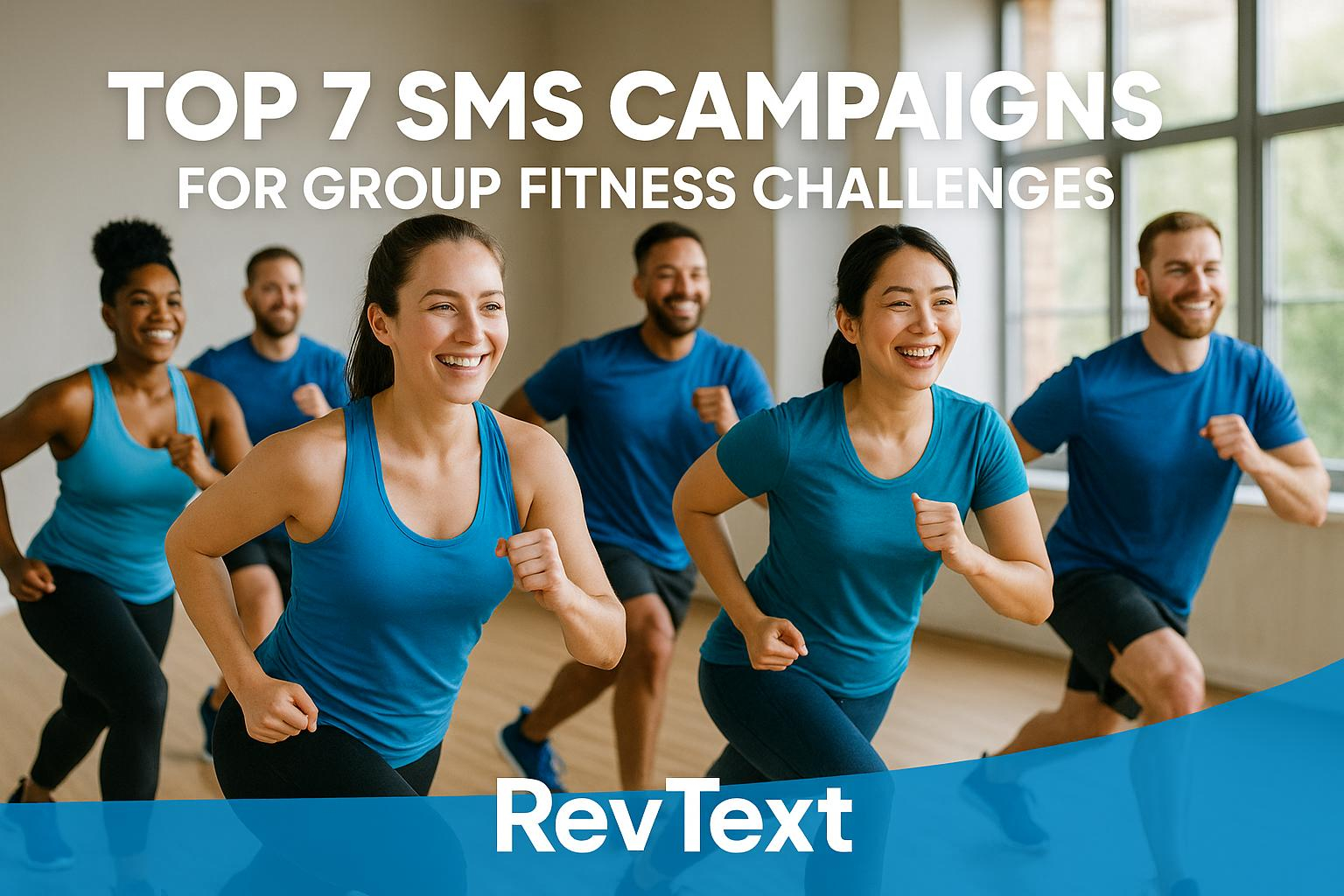
SMS campaigns are a highly effective way to boost engagement and participation in group fitness challenges. With a 98% open rate and a 45% response rate, text messages ensure your updates are seen and acted upon. Here’s how gyms and fitness studios can use SMS to drive sign-ups, keep members motivated, and build a sense of community throughout a challenge:
- Challenge Announcements: Send engaging texts 1–2 weeks before the challenge to spark interest and simplify registration with clear CTAs like “Reply YES to join.”
- Early Bird Reminders: Highlight discounts or perks to create urgency and drive early sign-ups.
- Weekly Check-Ins: Maintain momentum with personalized messages, progress updates, and motivational nudges.
- Leaderboard Updates: Encourage healthy competition by showcasing rankings and celebrating milestones.
- Mid-Challenge Motivation: Re-energize participants during the challenge’s toughest phase with timely, encouraging texts.
- Final Countdown & Celebration: Push participants to finish strong and celebrate their achievements immediately after the challenge ends.
- Post-Challenge Follow-Ups: Convert participants into long-term members by recognizing success and offering next steps.
These SMS strategies are proven to increase participation, retention, and overall engagement. Platforms like RevText make it easy to automate and personalize these campaigns, ensuring messages are timely and relevant. By leveraging SMS, fitness businesses can strengthen their community and keep members committed to their goals.
Fitness Marketing Strategies That ACTUALLY Work (2025)
1. Challenge Announcement Campaign
A well-executed challenge announcement SMS can spark immediate interest and drive sign-ups. This first message needs to grab attention, build enthusiasm, and make the registration process as simple as possible. Compared to traditional methods, a carefully crafted SMS can significantly boost participation rates. Let’s dive into the strategies that make these messages effective.
Timing and Frequency of Messages
Timing is everything. Send your announcement 1–2 weeks before the challenge begins to give members enough time to register. To maximize engagement, aim to send the initial message during peak hours – between 4:00 PM and 7:00 PM local time – when people are wrapping up their day.
Follow up with a reminder 2–3 days later to catch anyone who might have missed the first message. Be mindful of SMS guidelines and your members’ schedules by avoiding texts before 8:00 AM or after 9:00 PM.
One fitness studio reported a 25% increase in sign-ups by using this approach compared to their email-only campaigns. Timing matters, but tailoring your message for impact is just as important.
Personalization and Engagement
Generic messages don’t stand out. Personalization is key – use first names and reference fitness interests to make your SMS feel relevant. For example, instead of saying, “Join our challenge,” try: “Hi Sarah, ready to take your HIIT game up a notch? Join our 30-Day Group Challenge starting March 15!”
Segment your audience to make the message even more effective. New members might need more details about how the challenge works, while seasoned participants will appreciate messages that acknowledge their past achievements. This targeted approach not only boosts engagement but also reinforces a sense of community.
"customer engagement has definitely improved." – Marnus Schoeman, Non-Profit
Call-to-Action Clarity
Keep your call-to-action (CTA) simple and direct. Use phrases like “Reply YES to join,” “Tap here to register,” or “Text CHALLENGE to sign up.” Providing a clickable link or keyword reply option makes the process quick and easy. A clear and concise CTA ensures your message stays within the 160-character SMS limit.
Here’s an example: “Hi [First Name]! Our 6-Week Group Fitness Challenge starts April 1. Reply YES to join or tap [link].” The goal is to remove any barriers that might prevent someone from signing up.
Platforms like RevText make this process even smoother by automating keyword replies and offering instant registration links.
Motivational and Community-Building Focus
Tap into the power of community. Instead of focusing solely on individual goals, highlight the group aspect of the challenge. Phrases like “Join your fellow members,” “Let’s crush our goals together,” or “Compete for a spot on the leaderboard” appeal to people’s natural desire for connection and friendly competition.
Incentives can also make a big difference. Offer rewards like gift cards, free training sessions, or even just bragging rights to encourage sign-ups. Creating a sense of urgency – “Only 50 spots available – secure yours today!” – can further motivate members to take action quickly.
2. Early Bird Registration Reminder
Early bird reminders are a great way to create urgency while rewarding those who act quickly. These messages tap into initial interest and help turn undecided prospects into confirmed participants. The key is to strike a balance – remind members about the perks without overwhelming them.
Timing and Frequency of Messages
Timing is everything when it comes to early bird reminders. Start with your first message as soon as registration opens, ideally 2–3 weeks before the challenge begins. Then, follow up every 2–3 days, wrapping up with a final reminder 24–48 hours before the early bird deadline. For instance, if registration opens on December 1 and the early bird offer ends on December 7, you could send reminders on December 1, December 4, and December 6.
Here’s a real-world example: In March 2023, a boutique gym in Austin used RevText to automate early bird reminders for their Spring Bootcamp Challenge. By segmenting their audience and sending personalized messages, they achieved a 32% registration rate among recipients, with 80% of sign-ups happening before the early bird deadline.
This approach ensures you stay top of mind without overwhelming your audience. Plus, SMS marketing has impressive stats – gyms can see conversion rates as high as 45%, and the average SMS response time is just 90 seconds compared to 90 minutes for email.
Once your timing is set, focus on crafting messages that feel personal and relevant.
Personalization and Engagement
The more personal your message, the better it resonates. Mention past participation or highlight fitness goals to strike a chord. For instance:
"Hi Sarah, you crushed last year’s Spring Challenge! Don’t miss out on early bird savings for this winter’s group challenge – secure your spot today!"
Segment your audience to fine-tune your messaging. New members might need more details about the challenge benefits, while returning participants appreciate messages that celebrate their previous achievements.
As RevText puts it:
"We don’t believe in one-size-fits-all. Every business has its own story, goals, and audience, and we make sure your texts reflect that." – RevText
Tailored messages don’t just feel more personal – they’re more likely to drive action.
Call-to-Action Clarity
A clear and direct call-to-action (CTA) makes all the difference. Highlight early bird perks with concise messages like:
"Register by December 7 for $20 off!" or "Reply EARLY to lock in your savings."
Including a deadline and specific benefits creates both urgency and value. Pair your CTA with a clickable link or a reply keyword to make it easy for recipients to act. Keeping the message short and focused helps nudge hesitant members toward immediate registration.
Motivational and Community-Building Focus
Early bird reminders aren’t just about discounts – they’re also a chance to build excitement and strengthen the sense of community. Position early registration as an exclusive opportunity to join a motivated group. Use language like "Be part of our founding team" or "Join the early adopters who are serious about results" to make early registration feel special.
For example, in January 2024, Orangetheory Fitness ran an SMS campaign for their annual Transformation Challenge. They included early bird reminders with an added perk: "Register by Jan 10 for a free nutrition consult." This strategy led to a 28% increase in sign-ups compared to the previous year, with most registrations happening within 24 hours of the messages being sent.
Finally, tie the early bird offer to the group dynamic:
"Secure your spot alongside your workout buddies – early bird pricing ends this Friday!"
This not only emphasizes urgency but also reinforces the idea of being part of a supportive and motivated community.
3. Weekly Progress Check-In
Weekly progress check-ins are the glue that holds any group fitness challenge together. These updates keep participants motivated and accountable, ensuring the excitement doesn’t fizzle out after the initial registration phase.
Timing and Frequency of Messages
Timing matters when it comes to weekly check-ins. The ideal moments? Friday afternoons or Sunday evenings – times when people naturally reflect on their week or prepare for the one ahead. Pick a consistent day and time that suits your schedule and stick with it. For example, sending a message on Friday at 5:00 PM can catch members as they wrap up their workweek, while Sunday at 7:00 PM helps them plan for success in the upcoming week.
Take the example of a boutique gym in Austin. During their 6-week group fitness challenge in July 2023, they used RevText to send weekly check-ins every Friday at 5:00 PM. This consistency paid off, resulting in a 92% response rate and a 28% boost in challenge completion compared to their previous email-only campaigns.
For best results, schedule messages between 9:00 AM and 8:00 PM to respect participants’ routines and avoid sending messages at inconvenient hours.
Personalization and Engagement
A personal touch can turn a simple check-in into a meaningful connection. Start with the participant’s name and, when possible, acknowledge their specific progress. Instead of a generic “How’s your week going?” try something like, “Hi Sarah, you’ve crushed 4 out of 5 workouts this week – almost there!”
Using data from fitness apps or challenge platforms can help you include dynamic updates like badges, step counts, or streaks. You can even segment participants based on their performance. High achievers might enjoy a little friendly competition, while others may need extra encouragement to stay on track.
For example, recognizing milestones or tailoring messages to individual progress can make participants feel seen and supported, which naturally boosts engagement.
Call-to-Action Clarity
Every check-in message should include a clear and simple call-to-action (CTA) that encourages quick responses. Here are a few effective examples:
- “Reply with the number of workouts you completed this week.”
- “Send us your progress photo for a chance to win a prize!”
- “Click here to update your results and check the leaderboard.”
Keep your CTAs conversational and supportive. For instance, “Let us know how you’re doing!” feels far more approachable than something overly formal or demanding.
Motivational and Community-Building Focus
Weekly check-ins are also a chance to celebrate both individual and group milestones. Highlighting collective achievements can inspire the group, with messages like, “Together, we burned 10,000 calories this week!” or “Our group logged 1,200 miles – let’s aim for 1,500 next week!”
Don’t forget to shine a spotlight on individual efforts, too. Shout-outs like, “Kudos to Team Alpha for leading this week’s step count!” or “Amazing job to everyone who completed 3+ workouts this week!” can go a long way in keeping spirits high.
These updates tie back to the challenge’s communal energy, reminding participants that they’re part of something larger. Research shows that people are 95% more likely to stick to a health goal when they’re working alongside others. Including motivational phrases like “Every step counts – keep going!” or “We’re stronger together!” reinforces this collective spirit and keeps the momentum alive.
4. Leaderboard and Milestone Updates
Leaderboard updates add an extra layer of motivation by showcasing individual accomplishments and encouraging a sense of healthy competition. Seeing your name rise in the rankings or hitting a personal milestone can energize participants and create a shared sense of achievement. These updates turn personal progress into collective excitement, keeping participants engaged and eager to continue.
Timing and Frequency of Messages
The best times to send leaderboard updates are twice a week – Monday mornings and Thursday afternoons. For example, schedule updates for Monday at 10:00 AM and Thursday in the late afternoon. Milestone messages, however, should go out immediately after the achievement, ensuring the recognition feels timely and meaningful.
Take Orangetheory Fitness as an example: during their January 2024 transformation challenge, they used SMS leaderboard updates to great effect. This strategy led to a 22% increase in challenge completions and a 15% rise in member retention during the event.
Personalization and Engagement
Generic messages don’t inspire action, but personalized updates can create genuine excitement. Tailor messages to the recipient’s progress. For instance, instead of a one-size-fits-all message, send something like: “Congrats, Sarah! You’ve climbed two spots this week and are now in 5th place!” This kind of personal touch resonates far more with participants.
Automated workflows can help celebrate milestones as they happen. Recognizing specific achievements – like hitting a new personal best or contributing to a team goal – makes participants feel seen and appreciated.
Call-to-Action Clarity
Every leaderboard update should include a clear, actionable step to keep participants engaged. Use short, direct calls-to-action (CTAs) such as: “Log your workout to climb higher” or “Share your progress with #FitChallenge for a bonus entry!” Include clickable links to make it easy for participants to take the next step.
Given that SMS messages boast a 98% open rate, your CTAs are almost guaranteed to be noticed. These updates act as a bridge between participants’ current progress and the next motivational push.
Motivational and Community-Building Focus
Leaderboard updates aren’t just about competition – they’re also an opportunity to foster community spirit. For example, you might highlight team milestones with messages like: “Team Update: Your group just hit 50,000 steps! Only 10,000 more to unlock the next reward. Keep it up!” Recognizing efforts from all participants, including those in the middle of the pack, ensures everyone feels valued. A message like: “Shoutout to everyone who logged 3+ workouts this week – you’re all doing amazing!” keeps the focus inclusive and encouraging.
Research shows that 95% of people are more likely to achieve health goals when working with others. Combining competitive elements with supportive, community-driven messaging – like “Every step counts in our group total!” or “You’re inspiring others to push harder!” – strikes a perfect balance between individual recognition and team camaraderie. This approach reinforces the group dynamic that’s central to SMS engagement strategies.
sbb-itb-9f7e00b
5. Mid-Challenge Motivation Boost
When the initial buzz of starting a fitness challenge starts to wane and the finish line still feels out of reach, a well-timed dose of motivation can make all the difference. The middle stretch of any fitness challenge is often where enthusiasm dips, and participants may feel tempted to give up. This is where mid-challenge motivational boosts – delivered via SMS – can help participants stay on track and push forward.
Timing and Frequency of Messages
The best time to send these motivational texts is right around the halfway point of the challenge, when energy and excitement tend to lag. Aim to send 1–2 texts per week during this phase. The sweet spots for timing? Mid-morning around 10:00 AM or early evening between 4:00–6:00 PM, as these are times when people often need a little extra encouragement.
Why SMS? Because it works. Studies show that 90% of text messages are read within 30 minutes. This makes SMS a highly effective way to deliver motivation exactly when participants need it most. Just be mindful of the timing – avoid sending messages before 10:00 AM or after 8:00 PM to keep engagement high and avoid intrusions.
Personalization and Engagement
Generic messages like "Keep it up!" often fall short, especially when someone is struggling to stay committed. To make your messages resonate, personalize them with the recipient’s name and even a link to track their progress. For example:
"You’re halfway there, Sarah! Keep up the amazing work – check out how far you’ve come: [link]."
Personalization isn’t just a nice touch – it’s effective. Nearly half (48%) of people appreciate marketing texts from businesses, like gyms, when the content feels relevant and adds value. To take it further, segment your audience based on their activity levels or workout habits. For instance, send a congratulatory message to those showing up consistently, while offering a gentle nudge to those who may have missed a few sessions.
Tools like RevText can automate this process, tailoring messages based on participant behavior. Whether it’s celebrating someone’s dedication or encouraging them to re-engage, personalized messages can reignite motivation and help participants transition smoothly into the final stages of the challenge.
Call-to-Action Clarity
Every motivational text should include a clear and actionable next step. Use direct calls-to-action (CTAs) to encourage immediate engagement, such as:
- "Reply BOOST for a quick tip to stay energized!"
- "Click [link] to see your progress and keep moving forward."
Incorporating keyword replies like "BOOST" adds an interactive element, delivering instant tips or encouragement to participants who need an extra push.
Motivational and Community-Building Focus
The best mid-challenge messages combine personal acknowledgment with a sense of community. Highlight individual accomplishments while celebrating group milestones to foster a sense of teamwork. After all, people are 95% more likely to achieve their health goals when they feel supported by others.
Here’s an example of a personal and community-focused message:
"You’re doing amazing, Alex! Plus, your team just hit a major milestone – 5,000 minutes logged this week!"
Sharing group achievements and inspiring moments can create a ripple effect of motivation. Try a message like this:
"Teamwork makes the dream work! Your group has crushed 5,000 minutes so far. Reply with your favorite workout moment to inspire others!"
It’s also helpful to address the inevitable challenges of the mid-phase with honesty:
"Week 3 can be tough, but every workout counts – keep pushing forward!"
6. Final Countdown and Celebration
The last few days of a group fitness challenge are crucial. Participants have dedicated weeks to this journey, and how you approach this final stretch can make all the difference. SMS messages during this time play a dual role: motivating participants to finish strong and celebrating their accomplishments.
Timing and Frequency of Messages
Plan your countdown SMS for 24–48 hours before the challenge ends. Send these messages in the evening when people are more likely planning their next day, giving them enough time to squeeze in their final workout or wrap up any last goals.
Once the challenge officially ends, send a celebration message within a few hours. Acknowledging their success right away taps into the excitement of completing the challenge and helps solidify their sense of achievement.
Keep your messaging concise – 1 or 2 texts during this phase are enough. Each message should feel intentional and meaningful, avoiding the risk of overwhelming participants with unnecessary notifications.
Personalization and Engagement
Generic messages won’t cut it when participants have just conquered a major challenge. Instead, focus on highlighting individual achievements to make everyone feel recognized. Use data like completed workouts, personal milestones, or streaks to craft messages that resonate on a personal level.
For example, a boutique gym in Texas used RevText during their 30-day group challenge in July 2023. They sent personalized daily reminders during the final week, followed by a celebratory "You did it!" message with a digital badge and an invite to a celebration class. The result? A 20% boost in event attendance and a 30% uptick in social media engagement.
Address participants by name and acknowledge their specific journey. Instead of a generic "Great job everyone!", try something like, "Amazing work, Jennifer! You logged 28 workouts this month – your dedication is inspiring!" A message like this turns a routine text into a personal celebration of their hard work.
Call-to-Action Clarity
Your final messages should include one clear, focused call to action. During the countdown phase, encourage participants to complete any remaining tasks: "Submit your final workout by 11:59 PM tomorrow to finish strong!"
For celebration messages, shift the focus to building community and fostering future engagement. Invite participants to share their success on social media using a branded hashtag, RSVP for a celebration event, or sign up for the next challenge while their motivation is high.
Keep it simple – one CTA per message. Examples include: "RSVP for Friday’s celebration party", "Show off your success with #FitChallenge2025", or "Claim your finisher’s badge here." Placing the CTA at the end of your message ensures it stands out.
Motivational and Community-Building Focus
The final phase is a chance to strengthen the sense of community that’s been built throughout the challenge. Celebrate both individual achievements and group milestones to create a shared sense of accomplishment. After all, people are more likely to hit their health goals when they feel a part of something bigger.
Orangetheory Fitness nailed this approach in 2023 with their "Transformation Challenge" SMS campaign. They sent daily motivational texts, a final countdown message in the last 48 hours, and a celebratory text linking to a virtual awards event. The results? A 15% increase in challenge completion rates and a 12% improvement in member retention.
Use positive, enthusiastic language to amplify the celebratory vibe. Add emojis to make messages pop, like "You crushed it! 🏆" or "Together, your team completed 10,000 miles! 🎉". These small touches help participants feel the magnitude of their achievements.
Encourage participants to celebrate each other, whether through group messages or social media. This peer-to-peer recognition extends the positive energy beyond your direct communication and reinforces the bonds formed during the challenge.
Platforms like RevText simplify the process by automating countdown and celebration messages while personalizing them for each participant. With MMS support, you can even include celebratory images or videos, transforming a simple text into a memorable moment.
With the challenge wrapped up, the focus shifts to maintaining engagement through thoughtful post-challenge follow-ups.
7. Post-Challenge Follow-Up and Retention
The challenge might be over, but your connection with participants is just beginning. This is the perfect time to capitalize on the sense of accomplishment participants feel and guide them toward becoming long-term members. A well-thought-out post-challenge SMS campaign can turn short-term success into a lasting fitness commitment.
Timing and Frequency of Messages
Timing is everything. Send your first follow-up message within 24–48 hours of the challenge ending. This keeps the momentum going while the experience is still fresh in their minds. Follow up again after a week, check in two weeks later, and then send another message around the one-month mark. Consistency matters more than bombarding them with daily texts. A few well-timed messages over a month will have a much greater impact than overwhelming participants with constant communication.
Personalization and Engagement
A generic "Thanks for participating" message won’t cut it – especially for someone who just hit a personal milestone. Make your messages personal and meaningful. Use their first name and reference specific achievements from the challenge. For example: "Congrats on completing the 30-Day Challenge, Sarah! Your dedication to finishing 28 workouts is inspiring!"
In 2023, Anytime Fitness took this approach by sending personalized SMS messages that included participants’ names and highlighted limited spots in their upcoming 6-week challenge. This strategy significantly boosted re-enrollments. Use the data you’ve collected – like milestones or streaks – to make participants feel recognized and valued.
Once you’ve personalized the message, guide them toward their next step with a clear and actionable call-to-action.
Call-to-Action Clarity
Every follow-up message should include a single, clear call-to-action (CTA). Whether it’s "Book your free follow-up class", "Join our next group challenge", or "Claim your member discount", make it easy for participants to take the next step. Use direct links or simple keywords like, "Text NEXT to join the next challenge" or "Reply YES to reserve your spot." Removing any barriers to action can increase conversions – personalized SMS messages alone can boost conversion rates by up to 20%. Keep each message focused on one opportunity to avoid confusion.
Motivational and Community-Building Focus
The sense of community built during the challenge is a powerful tool for keeping participants engaged. Use your follow-up messages to celebrate collective achievements, like: "Together, you completed 10,000 push-ups!" Highlight individual success stories to inspire others, and encourage participants to share their experiences on social media. You can even create a branded hashtag for challenge alumni to stay connected. Hosting post-challenge celebration events is another way to keep the positive energy alive.
With SMS open rates hovering around 98%, text messaging is one of the most effective ways to maintain engagement. Pair this with automation tools to streamline your campaigns while keeping them personal. Features like keyword replies, MMS support, and link tracking allow you to craft timely, relevant messages without losing the human touch. Plus, built-in compliance tools ensure your messages meet TCPA guidelines.
The post-challenge phase is your chance to turn participants into lifelong members. By focusing on timing, personalization, and community, your follow-up SMS campaigns can bridge the gap between a completed challenge and a lasting fitness journey.
Campaign Comparison Table
To create a successful group fitness challenge, having a clear strategy for SMS campaigns is essential. Below is a table that breaks down the timing, focus areas, goals, and best times to send messages for seven different campaign types.
| Campaign Name | Timing | Focus | Objective | Best Send Time |
|---|---|---|---|---|
| Challenge Announcement | 2-4 weeks before start | Build excitement and awareness | Maximize initial registrations | 8:00 AM or 6:00 PM |
| Early Bird Registration Reminder | 1-2 weeks before start | Create urgency with incentives | Drive early sign-ups | 10:00 AM or 7:00 PM |
| Weekly Progress Check-In | Every Monday during challenge | Accountability and encouragement | Keep participants engaged and reduce drop-offs | 8:00 AM Monday |
| Leaderboard & Milestone Updates | Weekly or bi-weekly during challenge | Encourage competition and recognize achievements | Foster friendly competition | 6:00 PM weekdays |
| Mid-Challenge Motivation Boost | Halfway through the challenge | Re-energize participants | Prevent mid-challenge drop-offs | 7:00 AM or 5:00 PM |
| Final Countdown and Celebration | Last 3 days of challenge | Build excitement for the finish line | Drive completion and celebrate effort | 8:00 AM daily |
| Post-Challenge Follow-Up | 24-48 hours after challenge ends | Retention and next steps | Convert participants into long-term members | 10:00 AM or 2:00 PM |
This table provides a concise guide to the timing and purpose of each campaign. In line with U.S. fitness communication trends, early morning messages (7:00–8:00 AM) are ideal for motivational updates, as many people check their phones first thing in the morning. Evening messages (5:00–7:00 PM) work well for reminders and updates when people are winding down from their day.
Stick to the suggested frequencies to avoid overwhelming participants. One exception is the final countdown phase, where daily messages during the last three days can create a sense of urgency and excitement without feeling intrusive.
Gyms that implement this structured SMS approach have seen impressive results, including a 30% increase in class attendance and a 25% boost in membership renewals, compared to those relying solely on email communication.
With tools like RevText’s automated workflows, keyword replies, and link tracking, you can fine-tune your campaigns for maximum impact. By focusing on these strategic touchpoints, your SMS campaigns can effectively support your group fitness challenge, building a stronger sense of community and keeping participants engaged.
Conclusion
SMS campaigns provide gym owners with a reliable way to boost participation in group fitness challenges. With an impressive open rate of over 90%, text messages reach members almost instantly, helping to create the accountability that drives success in these challenges. The seven campaign strategies discussed earlier work together to take participants from initial interest to successful completion, while also fostering long-term member retention. Timing plays a crucial role in maximizing this effectiveness.
For example, sending registration reminders about a week before the challenge begins can spark interest and encourage early sign-ups. Regular check-ins during the challenge help maintain momentum, while creating a sense of urgency. Personalization also makes a big difference – address members by name and reference their progress to keep them engaged. Simple, direct calls-to-action like "Sign up now" or "Reply YES" can prompt immediate responses and drive participation.
Gyms that adopt structured SMS campaigns often see participation and retention rates improve by as much as 30%. Additionally, research shows that people are 95% more likely to achieve their fitness goals when they work alongside others, highlighting the importance of community-focused challenges.
For gym owners ready to get started, platforms like RevText offer tools designed specifically for the fitness industry. Features like automated workflows, keyword-based responses, and compliance support make it easy to manage the technical side of SMS campaigns, so you can focus on creating engaging challenges that inspire your members.
Strategic SMS campaigns don’t just encourage short-term involvement – they help build meaningful connections with members, leading to stronger retention and long-term business growth.
FAQs
How can SMS campaigns boost engagement in group fitness challenges?
SMS campaigns offer an effective way to stay connected with participants in your group fitness challenges. With an astounding 98% open rate, text messages are much more likely to grab attention compared to emails or other traditional communication methods.
Sending timely, personalized texts allows you to remind participants about upcoming workouts, share motivational tips, and even acknowledge their milestones. This instant communication keeps everyone engaged, boosts enthusiasm, and creates a strong sense of community throughout the challenge.
How can I personalize SMS messages to increase participation in fitness challenges?
Personalized SMS messages play a big role in catching attention and boosting participation in fitness challenges. Start by using the recipient’s first name to give the message a friendly, personal touch. Mentioning their past involvement, fitness goals, or achievements adds an extra layer of connection, showing that you genuinely understand their progress and journey.
Timing matters too. Send messages when people are most likely to respond – think early mornings or after work hours when they’re more likely to have a moment to engage. Don’t forget to include a clear, simple call-to-action, like signing up for a class or replying directly to the message. This makes it easy for them to take the next step without overthinking.
How can fitness studios use SMS to turn challenge participants into loyal members?
SMS marketing is an effective tool for fitness studios to connect with challenge participants and motivate them toward long-term memberships. By sending tailored messages, studios can spotlight special deals, share progress milestones, or offer post-challenge perks that create both urgency and added value.
For instance, you might send a congratulatory message to participants after they complete the challenge, paired with a limited-time discount or bonus for signing up. These well-timed, focused messages not only drive sign-ups but also deepen the bond between your studio and its members.