SMS reactivation campaigns are a cost-effective way to bring back inactive customers, especially for gyms and studios. They focus on personalized, timely messages to re-engage members, offering incentives like free sessions or discounts. Here’s why they work and how to implement them:
- Why Reactivation Works: It’s cheaper to re-engage past members than to acquire new ones. SMS has a 98% open rate and a 45% response rate, making it ideal for quick, direct communication.
- Key Steps:
- Segment Your Audience: Group members by inactivity length and preferences for tailored messaging.
- Craft Compliant Messages: Follow legal guidelines (e.g., opt-ins, opt-outs) and keep messages short and personal.
- Choose the Right Timing: Send texts between 10:00 AM and 6:00 PM, avoiding holidays or weekends.
- Set a Campaign Schedule: Space messages 3–6 weeks apart to avoid overwhelming recipients.
- Leverage Tools: Use platforms like RevText to automate workflows, track responses, and refine campaigns.
Success depends on analyzing metrics like response rates, reactivations, and opt-outs. Platforms with automation and analytics, such as RevText, simplify the process, helping businesses optimize their strategies and reconnect with members effectively.
How To Turn Old Gym Leads Into Cash (No Ad Spend Needed)
Preparing Your Member List for Reactivation
To run a successful SMS reactivation campaign, you need a clean and well-organized member list. This ensures your messages reach the right people and comply with legal requirements.
Segmenting Inactive Members
Breaking your list into segments based on inactivity and membership type can make your outreach more effective.
Start by categorizing members by how long they’ve been inactive. For example, someone who hasn’t visited in 30 days is at a different stage than someone who’s been away for 90 days. Create groups like recent inactivity, moderate inactivity, and long-term inactivity. Each group can receive tailored messages: a gentle nudge to return for the 30-day group, while those absent longer might respond better to incentives like a free session or a discount.
Membership type is another way to segment. Monthly members might be drawn to short-term offers, while annual members could benefit from a friendly check-in or a reminder of the perks they’re already paying for. If you sell class packs, target those who haven’t used up their sessions.
For deeper personalization, analyze past engagement. If a member regularly attended yoga classes but stopped, you could send them a message about an upcoming yoga workshop or a new instructor. Segmented campaigns are powerful – data shows they can drive up to 760% more revenue compared to non-segmented ones.
Verifying and Updating Contact Information
Even the most well-crafted message won’t work if it’s sent to the wrong number. Before launching your campaign, make sure all contact information is accurate and up-to-date. Incorrect or outdated numbers waste your budget and hurt campaign results.
Ensure phone numbers follow U.S. formats. Many SMS platforms, like RevText, offer tools to flag invalid or duplicate numbers, reducing delivery failures. Also, double-check that every contact has opted in to receive marketing texts. U.S. regulations require written consent for SMS communications. If you’re unsure about a member’s opt-in status, it’s better to leave them out to avoid compliance issues.
Consider implementing a double opt-in process for extra accuracy. When someone signs up for SMS, send a confirmation message asking them to reply "YES" to confirm. This step verifies the number, secures consent, and ensures they genuinely want to receive texts.
Regular updates to your list are equally important. People change phone numbers, cancel services, or move. Review your records at least quarterly or before major campaigns. Remove unsubscribed or inactive numbers and add new opt-ins to keep your list fresh and effective.
Once your list is updated, use past interactions to guide your outreach strategy.
Tracking Member Engagement History
To make your messages feel personal and relevant, analyze how members have engaged with your business in the past. This insight can help you craft messages that resonate and increase the likelihood of reactivation.
Look at patterns in past behavior. If a member frequently attended specific classes, booked personal training, or joined events, reference those details in your message. For example, if Sarah was a regular at spin classes, you could say, "Hi Sarah, we miss you! Check out our new Thursday spin session with Mike."
Using past data also helps you avoid over-messaging. If someone hasn’t responded to multiple reactivation attempts, it might be time to pause or try a new approach. On the other hand, if a member recently interacted with your business through social media or email, they might be more open to receiving an SMS.
Platforms like RevText can make this process easier with automated workflows and engagement tracking tools. These tools help you see who’s responding, what messages are working, and adjust your strategy over time without manually sifting through records.
Choosing the Right Timing and Frequency
Timing and frequency can make all the difference in the success of your SMS reactivation campaign. Send messages too early or too late, and they might get ignored. Space them too far apart, and you could miss the chance to re-engage your members.
Just like segmenting your audience ensures you’re targeting the right people, nailing the timing and frequency ensures your messages reach members when they’re most likely to respond.
Best Days and Times to Send SMS Messages
When you send your SMS messages can significantly affect how well they perform. Studies show that 98% of SMS messages are opened, and 90% are read within three minutes of delivery. For gyms and fitness studios, Tuesday through Thursday tend to be the sweet spot for engagement. Mondays are often too busy as people recover from the weekend, while weekends are more personal, making promotional messages feel intrusive.
The best time to send messages is typically between 10:00 AM and 6:00 PM local time, with peak engagement happening from 10:00 AM to 12:00 PM and again from 4:00 PM to 7:00 PM. These windows align with natural breaks in the day when people are more likely to check their phones.
If you’re running campaigns across multiple locations, time zones are critical. For example, a message sent at 10:00 AM Pacific Time will feel perfectly timed for California members but could arrive too early for those in New York. Platforms like RevText can handle these adjustments automatically, ensuring messages arrive at the right time for each recipient. One fitness studio saw a 37% increase in reactivations by using AI to send messages during personalized optimal times instead of batch-sending at one fixed time.
Once you’ve nailed the best days and times, aim for consistency. A steady rhythm of communication keeps your campaign effective without overwhelming your audience.
Determining Campaign Frequency
Striking the right balance between staying visible and not being annoying is key. For SMS reactivation campaigns, a good rule of thumb is to space messages 3 to 6 weeks apart. This gives members enough time to consider your offer without feeling pressured.
A typical campaign might look like this:
- Start with a friendly check-in message.
- Follow up in two weeks with an incentive, like a special offer.
- Send a final reminder two weeks later, emphasizing urgency or a stronger deal.
Keep your series to three messages per month to avoid overwhelming your members. And make sure each message brings something new to the table. For example:
- The first message could simply say you miss them.
- The second might highlight a new class or instructor they’d enjoy.
- The final one could include a limited-time discount or offer for a free session.
Pay close attention to opt-out rates – they’re a great indicator of whether you’re sending too many messages or not providing enough value.
Avoiding Common Scheduling Mistakes
Even the best-crafted messages can fall flat if sent at the wrong time. Here are a few common mistakes to avoid:
- Sending Messages Too Early or Too Late: Stick to the window between 8:00 AM and 9:00 PM. Messages sent outside these hours can not only annoy members but also lead to legal trouble.
- Ignoring Holidays and Major Events: Avoid sending messages on days like Thanksgiving, Christmas, or the Fourth of July, when people are focused on family and celebrations. Similarly, steer clear of major sporting events or local happenings when your audience is likely distracted.
- Forgetting About Time Zones: If you have members in different regions, make sure your messages are scheduled according to their local time. Nobody wants to receive a text at 5:00 AM.
- Overloading Members with Messages: If you’re running multiple campaigns at once, like a reactivation series alongside a promotion, make sure you’re not overwhelming members. If someone hasn’t responded to your initial text, try a new approach or incentive instead of repeating the same message.
Platforms like RevText can help you sidestep these issues by managing send times, frequency caps, and time zone adjustments automatically. This takes the guesswork out of scheduling and helps you maintain positive engagement with your members while avoiding costly mistakes.
sbb-itb-9f7e00b
Step-by-Step Guide to Scheduling SMS Campaigns with RevText
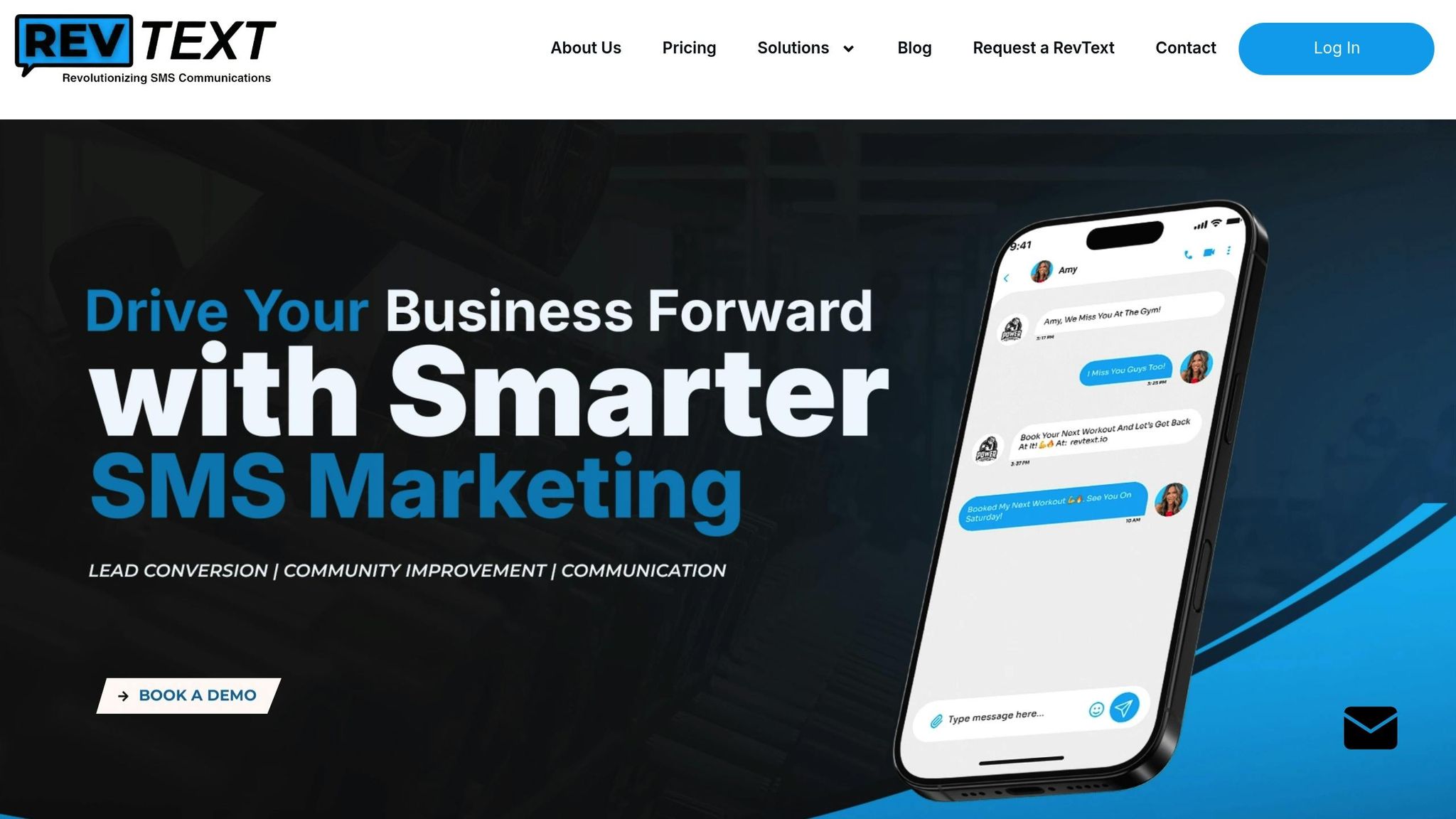
RevText simplifies the process of running SMS reactivation campaigns for gym owners and fitness studios. It’s built to help you schedule, automate, and monitor your campaigns without needing any technical know-how. From setting up automated workflows to tracking which messages get results, the platform takes care of the details so you can focus on reconnecting with inactive members.
Setting Up SMS Automations
RevText makes it easy to automate reactivation messages. Start by identifying your inactive members within the platform and defining what inactivity means for your gym. For example, you might target members who haven’t visited in 30, 60, or 90 days. Once you’ve set this criteria, you can create a workflow that automatically sends a message when a member reaches your defined inactivity threshold.
For instance, if a member hasn’t visited in 30 days, RevText can send out the first message in your reactivation sequence. You can then set up a drip campaign to follow up at regular intervals. Here’s an example of how this might look:
- Send the first message at 30 days to reintroduce your gym and remind them of their membership.
- If there’s no response, send a follow-up within 3–5 days with a time-sensitive offer to create urgency.
- After 7–10 days, send another message with a different incentive, like a free class or a special discount.
Each message in the sequence should have a clear purpose. The first might focus on awareness, the second on urgency, and the third on offering additional perks or social proof. RevText automates this entire process, ensuring your messages go out on schedule without overwhelming recipients.
To personalize your campaigns, use message templates that reflect your gym’s tone and style. RevText allows you to create a library of pre-written messages that include dynamic fields, like member names or favorite class types. For example:
"Hi [MEMBER_NAME], we miss you at [GYM_NAME]! Come back to your favorite [CLASS_TYPE] classes and enjoy [OFFER_PERCENTAGE]% off this month."
This approach ensures messages feel personal without requiring manual customization. You can even tailor templates for different inactivity levels, like sending friendly reminders to members inactive for 30 days and highlighting new offerings for those inactive for six months.
Using RevText Features to Improve Campaign Results
RevText’s interactive tools transform one-way messages into two-way conversations. For example, you can include a call-to-action like, “Reply YES to claim your 20% discount.” When members respond, the platform can automatically send a confirmation, a discount code, or a link to book a class. Keywords like “YES,” “CLAIM,” or “OFFER” can trigger specific replies, making the process seamless for both you and your members.
This feature also allows you to collect valuable information about member preferences. For instance, if members reply with their favorite class type or preferred time slot, you can use this data to tailor future campaigns. Additionally, setting up an opt-out keyword like “STOP” ensures compliance and prevents frustration.
Another powerful tool is link tracking. By including shortened URLs in your messages, you can see exactly how members engage with your offers. For example, if a message promoting a 20% discount gets a 15% click-through rate but a follow-up offering a free personal training session only gets 8%, you’ll know which incentive resonates better. Tracking these metrics helps refine your strategy over time, ensuring your campaigns continue to improve.
Monitoring and Adjusting Campaigns
Once your campaign is live, it’s crucial to monitor its performance. RevText’s dashboard provides real-time insights into key metrics like open rates, click-through rates, response rates, and conversions – such as how many members return to your gym or book a class. During the first week, keep a close eye on these numbers to identify what’s working and what needs adjustment.
For example, if a message leads to a high opt-out rate, you might need to revise your approach. This could mean spacing messages further apart, testing different offers, or softening the tone of your copy. RevText makes it easy to pause a campaign, tweak your messaging, and restart without losing momentum.
The platform also offers an iOS mobile app, so you can manage campaigns from anywhere. Whether you’re on the gym floor or traveling, you can check performance, respond to member replies, and make real-time adjustments. This flexibility ensures you’re always in control of your reactivation efforts.
One standout feature of RevText is the expert support included with the platform. Their team of SMS specialists provides data-driven strategies, tested copy, and automation tips to help you get the most out of your campaigns. As Tracey Martin, an event host, shared, the experts are “ready to adapt to trends and get optimal engagement.”
"The support has been the best – quick responses and very helpful. They’ve also helped us troubleshoot any issues and provided support with systems integration."
- Marnus Schoeman, Non-Profit
This partnership goes beyond software. RevText’s experts help interpret your campaign data, recommend adjustments, and ensure you’re following best practices for compliance and engagement. Whether it’s identifying an effective message or a high-performing time slot, the platform makes it easy to act quickly and keep improving your results.
Measuring Success and Optimizing Future Campaigns
Launching an SMS reactivation campaign is just the first step. The real win lies in analyzing what works, what doesn’t, and fine-tuning your approach for better results. With RevText’s analytics tools, you gain access to real-time data that helps you evaluate performance and improve your strategy as you go.
Tracking Key Metrics
To measure progress, focus on metrics that truly reflect reactivation success. Start with response rates, which show how many members reply to your messages – this helps you gauge whether your content sparks action. Then, look at reactivation rates, the percentage of inactive members who return to active status after receiving your campaign. Conversion rates are equally important, measuring how many members take the desired action, such as booking a class, renewing a membership, or making a purchase. As a benchmark, aim for a 5% conversion rate on purchases and a 15% re-engagement rate within 30 days.
Keep an eye on opt-out rates, which indicate member dissatisfaction. A healthy opt-out rate should stay below 5%. If it climbs above 10%, it’s time to rethink your messaging – whether it’s timing, frequency, or content.
RevText’s dashboard simplifies this process by calculating these metrics in real time, showing which member segments are most responsive, which offers lead to the highest conversions, and which messages generate the most engagement. The platform’s link tracking feature also provides insights into how many members click through to booking pages or offers, helping you understand what drives action.
Pay attention to click-through rates (CTR) for links in your messages. A strong CTR for reactivation campaigns typically ranges from 5% to 15%. If your open rates are high but CTR is low, the issue might be an unclear call-to-action or an unappealing offer. If both metrics are low, consider tweaking your send time or making your message more relevant. Remember, research shows that 80% of sales require multiple follow-ups, so engagement often builds over time.
A/B Testing for Continuous Improvement
Once you’ve tracked the key metrics, refine your campaigns by testing different elements. Experiment with variables like message content (emotional appeals vs. direct offers), send times (e.g., lunch breaks vs. evenings), call-to-action language (urgent phrases like “Claim your spot now” vs. exclusive ones like “VIP access only”), and offer types (percentage discounts vs. free trial classes).
Focus on one variable at a time. For example, test send times by sending the same message to one group at 12:30 PM and another at 6:00 PM, then compare the results. You can also test personalization – compare a generic message with one that includes the member’s name or purchase history. Personalized messages often generate up to 20% higher response rates. For frequency, try sending messages every two weeks to one group and every four weeks to another to find the ideal schedule. Use RevText’s dashboard to document your findings and spot trends.
RevText’s team of experts can guide you with proven strategies, tested messaging, and automation tips, helping you avoid the guesswork that often comes with campaign management. Use these insights to refine your overall strategy and make data-driven decisions.
Refining Your Campaign Strategy
With your analytics and scheduling tools in place, it’s time to build on what you’ve learned. Use past performance data to identify trends in member behavior, preferences, and responsiveness. Track which messages, offers, and timings work best for each member segment.
For instance, if data shows that yoga enthusiasts respond well to messages sent at 6:00 PM with class-specific offers, prioritize that approach for similar groups. Analyze which emotional tones resonate most – whether it’s a heartfelt “We miss you!”, a time-sensitive “Limited-time offer,” or an exclusive “VIP member special.”
Tailor strategies to specific personas, like “budget-conscious new members” or “long-term loyal members,” by aligning offers and timing with their past behaviors. Seasonal trends also matter – January might be ideal for targeting New Year’s resolution seekers, while summer campaigns could appeal to those with fitness goals tied to the warmer months.
Replicate strategies that hit performance benchmarks and adjust where conversion rates fall short. For example, if there’s a noticeable delay between when members receive a message and when they act, a well-timed follow-up reminder might make all the difference.
Finally, document everything in a campaign playbook. This ensures your team has a resource to build on, even as members come and go. With RevText’s robust reporting and tracking tools, maintaining detailed records and sharing insights becomes second nature, setting your campaigns up for long-term success.
Conclusion
When it comes to reactivating gym members, a well-planned SMS campaign can make all the difference. By combining segmentation, perfect timing, and automation, you can create a system that encourages members to return. Success depends on preparation, smart scheduling, effective tools, and continuously improving based on data.
Timing matters. Sending messages during lunch breaks or early evenings – times when people are more likely to check their phones – can significantly boost engagement. To strike the right balance, space out campaigns by three to six weeks. This approach keeps your gym on their radar without overwhelming them. Reserve SMS messages for impactful updates like seasonal promotions or major facility news, rather than routine notifications.
RevText simplifies automation. With its automated workflows, RevText ensures your messages are sent at the best times, freeing you from the need to micromanage. Features like keyword replies, link tracking, and MMS support help you craft engaging campaigns that inspire action. Plus, built-in compliance tools let you focus on strategy without worrying about regulations.
Data is your guide. Tracking metrics like response and conversion rates helps fine-tune your campaigns. For example, aim for a 15% re-engagement rate within 30 days and a 5% conversion rate to purchases. Experiment with different messages, timing, and offers to see what works best, and document your findings to improve future campaigns.
With pricing starting at $495 per month, RevText offers a full-service solution for fitness businesses. From campaign planning and content creation to scheduling and performance analysis, it’s all under one roof. The platform’s iOS app even lets you monitor campaigns on the go, making it easy to stay informed no matter how busy you are.
FAQs
How can I make sure my SMS reactivation campaigns follow legal guidelines and avoid fines?
To keep your SMS reactivation campaigns on the right side of the law and steer clear of penalties, it’s crucial to adhere to regulations like the Telephone Consumer Protection Act (TCPA) and the CAN-SPAM Act. These laws require you to get clear, prior consent from recipients before sending any marketing messages. Plus, you must provide a simple way for them to opt out – like including a line such as “Reply STOP to unsubscribe” in your texts.
Here are a few extra tips to ensure compliance:
- Only send messages during reasonable hours, typically between 8 AM and 9 PM local time.
- Avoid using misleading language or making deceptive offers.
- Keep thorough records of customer consent and campaign activities for accountability.
Tools like RevText can make this process easier. With built-in compliance features, they help you automate the legal stuff so you can focus on crafting campaigns that connect with your audience.
What are the best ways to segment my audience for more effective SMS reactivation campaigns?
Segmenting your audience is essential for crafting SMS reactivation campaigns that truly resonate. Begin by organizing members into groups based on their behavior – things like recent activity, membership type, or how long it’s been since their last visit. For instance, you might target members who haven’t stopped by in 30, 60, or 90 days.
To take it a step further, tap into demographic details such as age, location, or personal preferences. This added layer of customization makes your messages feel more relevant and engaging. Pro Tip: Experiment with different segments and track their performance closely. This way, you can fine-tune your approach and improve results over time.
How can I use RevText’s analytics tools to optimize my SMS reactivation campaigns?
RevText’s analytics tools simplify the process of optimizing your SMS reactivation campaigns. With these tools, you can track essential metrics like open rates, click-through rates, and response rates to see what’s working and pinpoint areas that need tweaking.
Start by reviewing the performance of your previous campaigns. Look for trends – like which messages performed best or when engagement peaked – and use that information to fine-tune your strategy. For instance, if you notice higher response rates on specific days or times, schedule your future messages to align with those patterns. You can also try A/B testing to compare different message formats or offers, helping you figure out what resonates most with your audience.
Regularly analyzing and adjusting your campaigns ensures they stay effective, keeping your audience engaged and boosting member retention.